Modena from Bologna: The Ferrari Split, the Acetaia Booking, and Twenty Minutes by Train
Twenty minutes up the line, Modena splits its fame three ways: Enzo Ferrari’s story in town, the factory shrine at Maranello, and balsamic aging in attics by the decade. You can’t do all three well — choose two.
The short version
- Trains run Bologna Centrale to Modena in 20–30 minutes at walk-up frequency and small fares — trenitalia.com; the center sits ten flat minutes from the station.
- The Ferrari split per the alarm: the Museo Enzo Ferrari in Modena (the birthplace-and-biography museum under its yellow aluminum bonnet) versus the Museo Ferrari at Maranello (the factory-side shrine of championship cars) — a shuttle connects them, each runs €20-plus, and both together consume the day the town also wants; museum logistics at ferrari.com/museums.
- Traditional balsamic — aceto balsamico tradizionale DOP — ages through barrel batteries in family attics for 12 to 25-plus years; acetaia visits (booked ahead, modest fees, tastings by the drop) turn the syrup back into craft and expose the supermarket product as a different substance wearing the name.
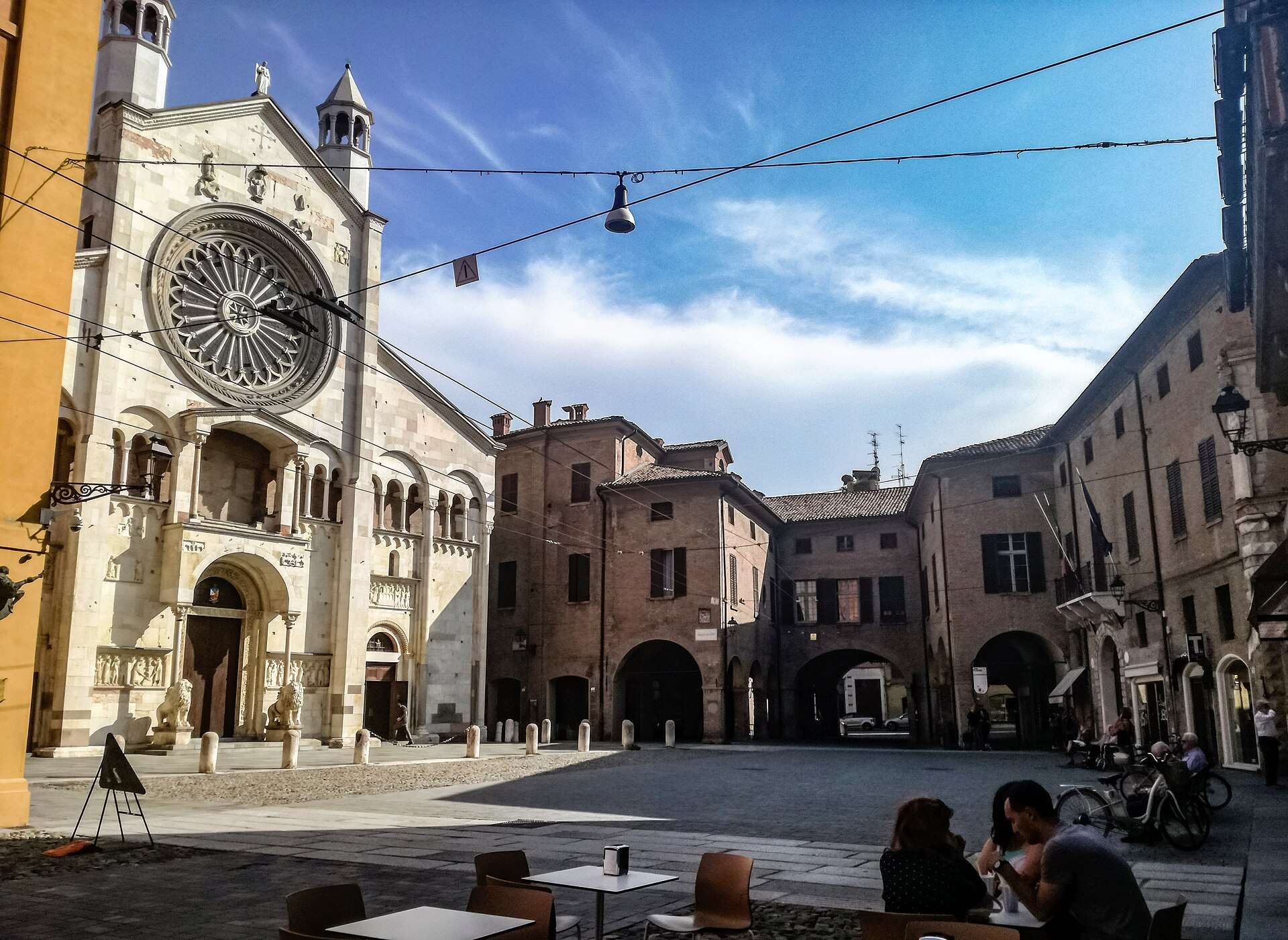
- The Duomo, Ghirlandina tower, and Piazza Grande hold joint UNESCO status — 12th-century Romanesque with Wiligelmo’s carved Genesis panels outside and the leaning tower’s climb on limited slots.
- The Mercato Albinelli’s iron-and-glass hall runs the eating city at counter level — tigelle, gnocco fritto, tortellini by the etto, and Lambrusco taken seriously in its home territory.
- Modena’s high end books months out — the three-star tables that made the city a pilgrimage — while the osterie and market counters serve the same terroir on walk-in terms; Pavarotti’s house-museum on the outskirts adds the other local voice for devotees.
Getting there
The twenty-minute hop makes Modena the network’s easiest Italian add — turn up, ride, walk in. The two bookings shape everything: the acetaia visit (family operations, fixed slots, often edge-of-town — taxi or tour transport per the confirmation) and, if chosen, the Maranello leg (the shuttle from Modena’s station area or the museums’ link service, ~30 minutes each way). The alarm’s choose-two arithmetic is honest: town + acetaia + one Ferrari museum fills the day at civilized pace; forcing all four produces a checklist with heartburn.
The day
Open on Piazza Grande: the Duomo’s carved Genesis in morning light, the interior’s Romanesque gravity, and the Ghirlandina’s lean measured from the café tables. The Albinelli market slots next for the grazing hour — balsamic stalls for calibration, tigelle for ballast. Then the chosen Ferrari: the Modena museum’s Enzo biography under the yellow bonnet (his father’s workshop preserved alongside) for the story-first visitor, or the Maranello shuttle for the silverware-and-F1 shrine with the factory gates’ pilgrim photo. The acetaia visit anchors the late afternoon — barrel batteries ranked by age in working attics, the annual transfer explained, and the tasting’s ascending decades landing the point no bottle label can: this is time, condensed. The evening train home takes twenty minutes; the Lambrusco purchases take longer to explain at home.
When to go
Modena runs year-round on food’s calendar more than weather’s: winter is broth-and-fog season built for tortellini, summer opens the piazza’s evenings, and September–October layers harvest festivals over everything. Acetaia visits book steadily in all seasons; Ferrari museum queues peak with summer and F1 race weekends (Imola’s crowds spill here). The Ghirlandina’s climb slots and the high-end tables share one rule — earlier is the only strategy.
Frequently Asked Questions
Which Ferrari museum should I pick?
Story versus shrine: Modena’s museum for Enzo’s biography, the workshop, and the design-history staging; Maranello for the championship cars, the F1 hall, and factory-gate proximity. First-timers with one slot lean Maranello for the hardware; the alarm’s split stands either way.
What makes traditional balsamic different?
Cooked grape must aged through a battery of shrinking barrels for a legal minimum of 12 years (25-plus for extravecchio), bottled only after consortium tasting, sold by the 100ml. Supermarket ‘balsamic’ is wine vinegar with coloring and shortcuts. One drop of the real thing on parmigiano ends the confusion permanently.
Is the Duomo worth time between the famous stops?
It’s the day’s actual masterpiece — a UNESCO Romanesque ensemble with Wiligelmo’s Genesis reliefs among the earliest great sculpture cycles in Italy. Twenty minutes minimum; the carvings repay slow reading.
Modena or Parma from Bologna?
This network documents both on the same line: Modena for engines and vinegar, Parma for cheese, ham, and the wooden theatre. Consecutive days is the food traveler’s answer; forced to one, choose by whether your pilgrimage is Ferrari or parmigiano.
Can I visit the actual Ferrari factory?
The production lines stay closed to the public — the Maranello museum, the factory-gate photo, and the track-glimpse tours are the available proximity. Owners get further; the rest of us get the museum’s cars, which stopped being a consolation prize decades ago.