Bologna Day Tours
I’m Serious Day Tour Man AI, your day trip expert. Ask me anything — where to go, how to get there, and what’s actually worth your day.
Bologna sits in the middle of Italy’s Food Valley with a train line running through it like a tasting menu. Modena and its balsamic attics are twenty minutes away, Parma’s cheese and ham vaults an hour, and the same corridor doubles as Motor Valley — Ferrari, Lamborghini, and Ducati all build within day-trip range. In the other direction wait the most dazzling mosaics in the Western world and a hilltop republic older than most countries. Nearly everything here is an origin pilgrimage — the place where the cheese, the ham, the vinegar, or the car actually comes from — and origin pilgrimages need booking: the dairies run on morning schedules, the acetaie are family attics, and the best doors don’t open to walk-ins.
The trains do most of the work. Nothing on this list needs a car except your own stubbornness.
Here’s what’s worth a day, with real times and honest trade-offs.
Popular Day Trips
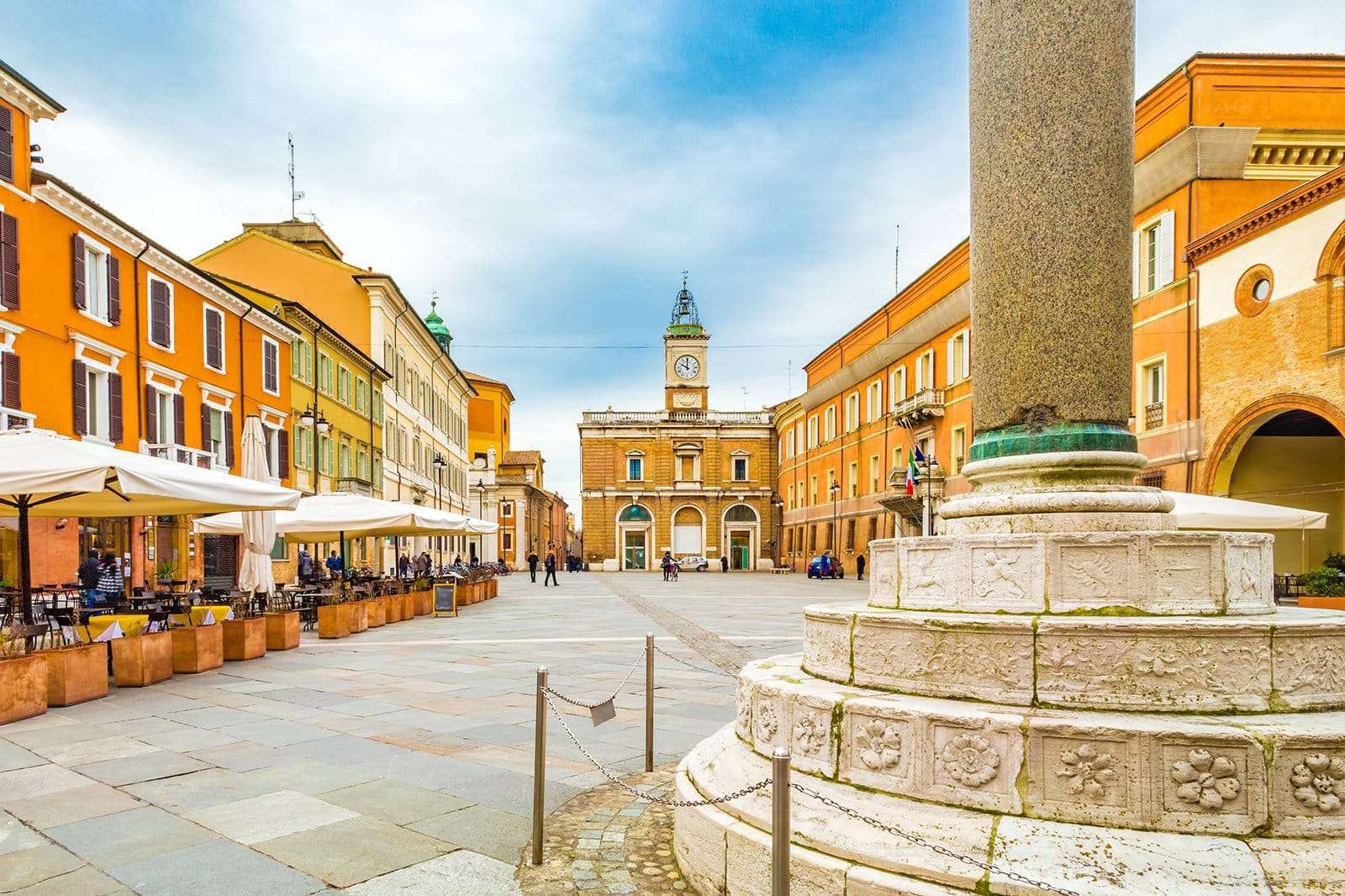
Ravenna
The Slow Train to the Mosaics, One Combined Ticket
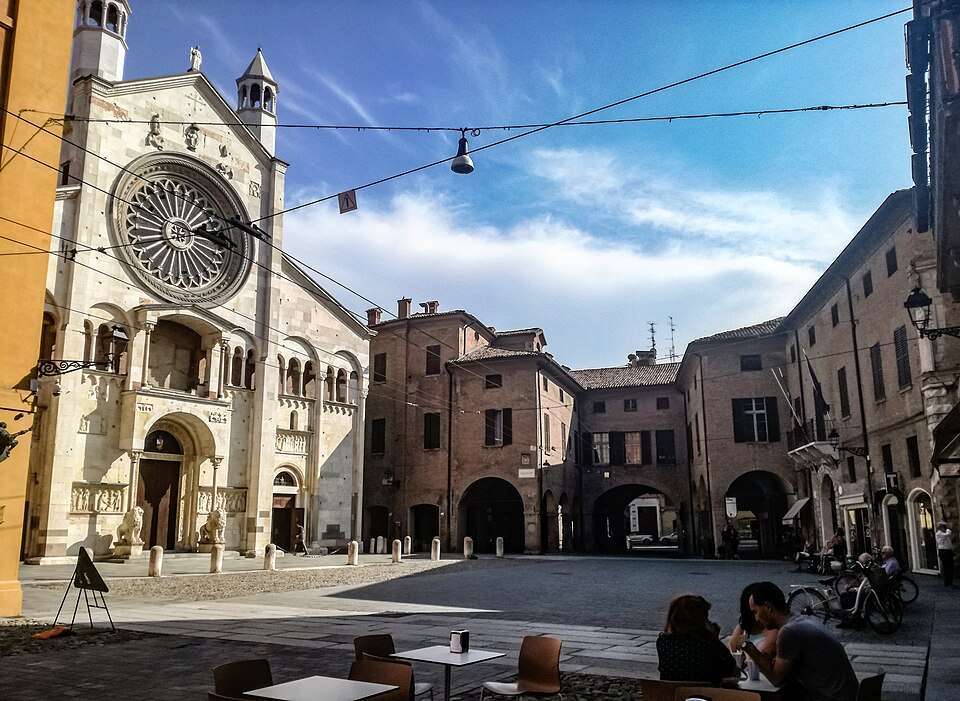
Modena
The Ferrari Split, the Acetaia Booking
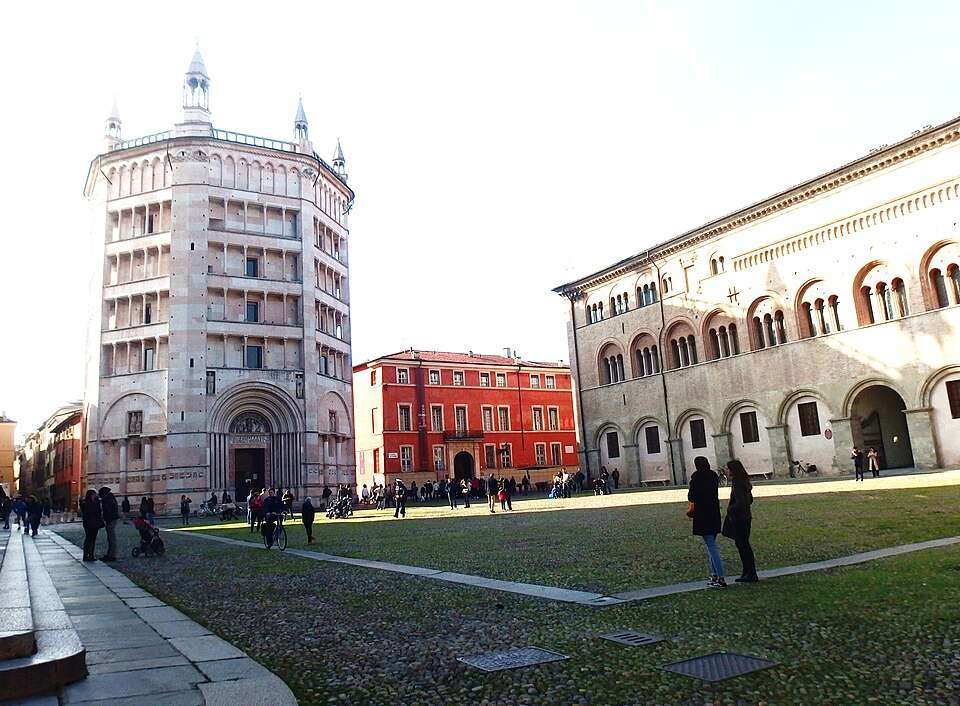
Parma
The Dairy Morning, the Wooden Theatre
Ferrara
The Renaissance’s Planned City, a Moated Castle Mid-Town
San Marino
The Oldest Republic, Three Towers on a Ridge
Modena — Balsamic, Ferrari & Twenty Minutes
The absurdly easy essential: twenty minutes by train, and Modena stacks three pilgrimages. Balsamic first, because it corrects a global misunderstanding — traditional balsamic (DOP, aged 12 to 25-plus years in attic barrel batteries) is a different substance from the supermarket bottle. An acetaia visit walks you through family attics and generations of barrels and ends the confusion by spoon. It’s the region’s best food experience and needs advance booking; several producers ring the city, and tours package them.
Then Ferrari. The Museo Enzo Ferrari in town — the birthplace, with its futurist yellow hall — pairs with the deeper Museo Ferrari at Maranello, twenty minutes on, with the engines, the F1 cars, and the sound of the test track included. Petrolheads make a full day of it.
The town itself holds a Romanesque UNESCO duomo, Pavarotti’s house-museum just outside the city, and the market where Massimo Bottura shops. One day handles food or Ferrari properly; doing both means choosing highlights.
Read the full Modena day-trip page.
Parma — The Cheese and the Ham at the Source
An hour west, and this is the origin pilgrimage at maximum. Parmigiano Reggiano dairies make the cheese once daily, in the morning, so visits start around 7 and the timing is non-negotiable — the milk doesn’t wait. Booking is essential. The reward is walking from steaming copper vats to aging halls where thousands of wheels sit in racked silence and an inspector taps them with a hammer to demonstrate the sound of perfection.
The prosciutto di Parma counterpart tours the curing houses of Langhirano, where windows open to the specific hills whose air is legally part of the recipe. Between pilgrimages, Parma the city fills its hours well: the Farnese Theater, a wooden theater of staggering scale from 1618 rebuilt after wartime bombing; the Correggio dome frescoes; and a pasta tradition — tortelli d’erbetta — that quietly contests Bologna’s crown. Tours bundle dairy, ham house, and an acetaia efficiently. Independent travelers must book each leg ahead.
Read the full Parma day-trip page.
Ravenna — The Mosaics
An hour east, and the least-expected world-class art city in Italy. When Rome fell, the Western Empire’s capital moved here, and the churches of the 5th and 6th centuries keep the evidence: mosaic ensembles that make Monreale look restrained. A combined ticket covers the core five monuments. San Vitale is the emerald-and-gold octagon with the Justinian and Theodora court panels. The Mausoleum of Galla Placidia is a small brick box whose blue starred vault is routinely called the most beautiful ceiling in existence — timed entry in season, and the ten minutes inside justify the trip alone. Sant’Apollinare Nuovo adds its long processions of saints.
Dante’s tomb is the literary footnote. Exiled Florence has begged for him back for centuries; Ravenna’s answer remains no, delivered with a votive lamp that Florence pays the oil for. Flat, walkable, and uncrowded by Florentine standards — the connoisseur’s day, full stop.
Read the full Ravenna day-trip page.
Ferrara — The Bicycle Renaissance
Thirty minutes northeast, Ferrara is the Este dukes’ planned Renaissance city — the first in Europe designed on a grid extension — and it works today as Italy’s bicycle capital. The streets are flat, nine kilometers of walls are walkable and ridable, and the rented bike is the correct vehicle, with the wall-top circuit as the day’s spine.
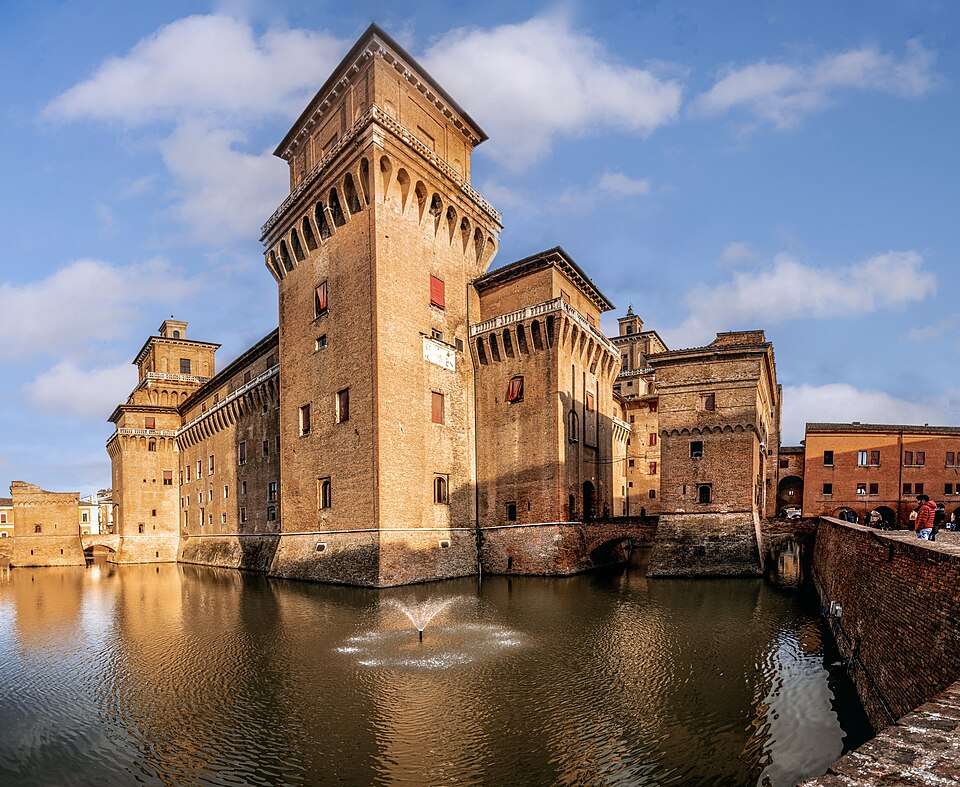
The set pieces: the moated Este Castle in the dead center of town, with drawbridges, dungeons, and the ceiling-frescoed apartments of a family Machiavelli studied; the Palazzo dei Diamanti and its 8,500 diamond-cut stones; and the medieval quarter’s Via delle Volte, a covered lane running like a stone tunnel through the old merchant district. The kitchen note: cappellacci di zucca — pumpkin-stuffed pasta with butter and sage, or ragù for traditionalists — is the local entry in the regional pasta argument. Ferrara is gentler and quieter than everything around it, the right day when the itinerary needs an exhale.
Read the full Ferrara day-trip page.
San Marino — The Republic on the Rock
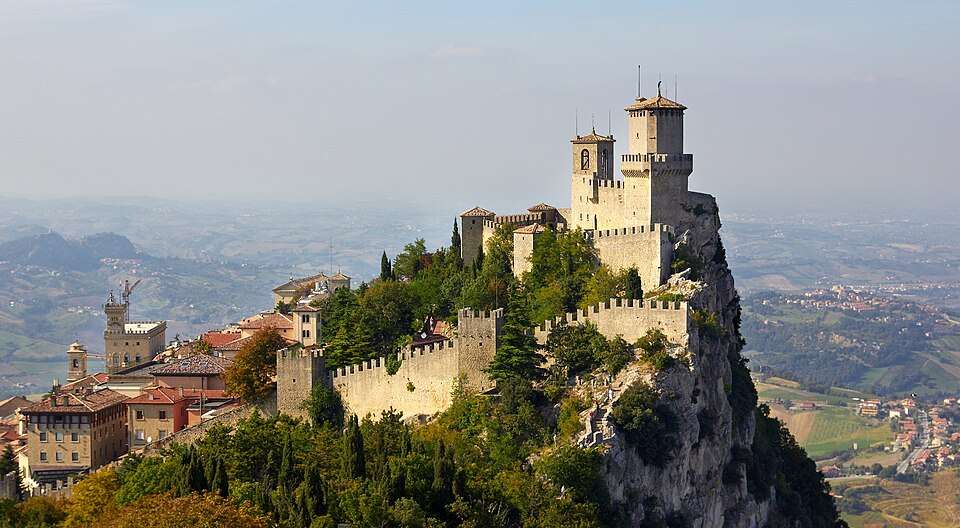
Ninety minutes southeast — train to Rimini, then the connecting bus up — and worth more than the passport stamp. San Marino is the world’s oldest republic, founded (by its own cheerful insistence) in 301 AD: a 61-square-kilometer state stacked on Monte Titano’s triple-peaked ridge, its three towers strung along the crest with the Adriatic on one side and the Apennines on the other.
The visit: the tower-to-tower ridge walk, with Guaita to Cesta as the essential stretch and the passo delle streghe between them as the photograph; the changing of the Guard in season; the passport stamp from the tourist office (a few euros, entirely optional, universally purchased); and the duty-free shopping the day politely tolerates. Honest notes: it’s a half day of content wrapped in transit, clouds can swallow the ridge entirely — save it for a clear forecast — and summer middays crowd the single main street, so mornings and shoulder seasons keep the storybook intact. Rimini’s Roman bridge and Fellini museum absorb the spare hours of the return leg.
Read the full San Marino day-trip page.
The Porticoes, the Towers & Bologna Itself
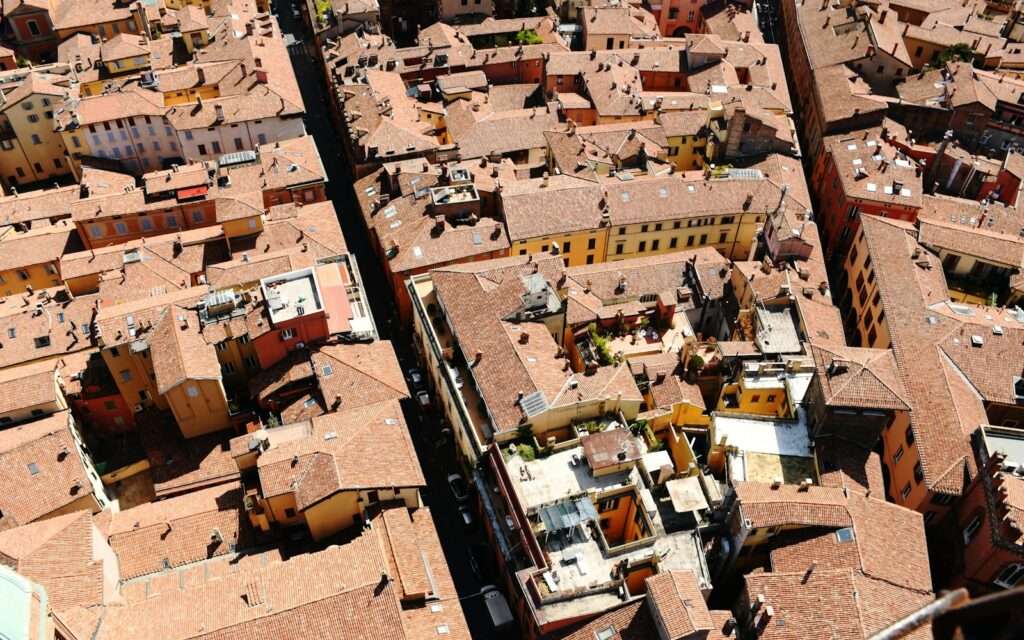
Bologna is worth days of its own, not just a rail hub’s glance between trains. The spine is the porticoes — 62 kilometers of them, UNESCO-listed — culminating in the Portico di San Luca: 666 arches climbing 3.8 kilometers to the hilltop sanctuary, the longest in the world and the locals’ daily constitutional. Walking up and taking the bus down is the sensible format. The Asinelli Tower’s 498 wooden steps buy the red-roofed panorama (timed tickets), with the caveat that stabilization works on its leaning partner, the Garisenda, have periodically closed the area — verify current access. The university adds the ticket most visitors miss: the Archiginnasio’s anatomical theater, a carved wooden operating room from 1637, spectacular and slightly macabre.
The food, with the rule stated at the source: tagliatelle al ragù is the dish — “spaghetti bolognese” does not exist here, and ordering it identifies you instantly — alongside tortellini in brodo (in broth; the nonnas consider cream a crime), mortadella at its birthplace, and the Quadrilatero market lanes where all of it assembles into the day’s graze. A pasta-making class here is the best culinary souvenir in Italy for the money. For evenings, Osteria dell’Orsa is the institution and the hidden Osteria del Sole — a bring-your-own-food wine bar operating since 1465 — is the find. Bologna is not a looker in the Florence sense. It’s a liver-colored, arcaded, working city that reveals itself through appetite and repetition, which is exactly why it makes the better base.
Frequently Asked Questions
Is Modena worth a day trip from Bologna?
Twenty minutes by train for traditional balsamic tastings (book the acetaia ahead), the Ferrari museums, and a UNESCO duomo. Food or Ferrari fills a day each; both means highlights only.
How do you visit a Parmigiano Reggiano dairy?
Book ahead for a morning slot — the cheese is made once daily and the vats don’t wait. Tours from Bologna bundle the dairy with a prosciutto house and an acetaia into one origin-pilgrimage day.
Why visit Ravenna?
The finest mosaics in the Western world — San Vitale and the Galla Placidia mausoleum’s starred vault — from the era when Ravenna, not Rome, was the capital. An hour by train and startlingly uncrowded.
Can you visit San Marino from Bologna?
Yes — train to Rimini plus the bus up, about 90 minutes each way, for the tower ridge walk and the world’s oldest republic. Save it for a clear-forecast day; clouds eat the views.
What should you order in Bologna?
Tagliatelle al ragù (never “spaghetti bolognese” — it doesn’t exist here), tortellini in brodo, and mortadella at the source, grazed through the Quadrilatero market or learned in a pasta class.